
How do I avoid vapor lock in high-flow systems?
In high-flow fuel systems with a power output exceeding 500 kilowatts, when the fuel temperature reaches above 80℃, it is very likely to induce vapor lock, causing the flow rate to drop sharply by 30% to 50%. This kind of gas phase blockage directly causes a 10% to 15% loss in engine output power. In extreme cases, such as a modified racing car stalling and retiring from a straight-line acceleration race in 2013 due to this. The core strategy is to maintain the fuel temperature below the critical point of 65℃ through forced heat dissipation. For instance, a fuel cooler with a -10℃ coolant circulation can stably reduce the pipeline temperature by 20℃. Combined with low thermal conductivity polytetrafluoroethylene (PTFE) lined oil pipes, the invasion of thermal radiation can be reduced by 40%, significantly delaying the time window for gas phase formation.
Upgrading materials engineering is an important way to enhance the system's resistance to cavitation. Practical data shows that when ordinary rubber oil pipes are replaced with multi-layer nylon braided + fluoropolymer composite pipes, their pressure resistance strength increases from 10 megapascals to 25 megapascals, while the coefficient of thermal expansion drops from 6.5×10⁻⁴/K to 2.1×10⁻⁴/K. As a result, the standard deviation of pressure fluctuations caused by pipe deformation is reduced by 60%. Aluminum alloy hard tubes, which are widely used in aviation kerosene supply systems and treated with ceramic coatings, have been tested to maintain a liquid density of 0.05g/cm³ at an ambient temperature of 120℃, thus avoiding local low-pressure areas caused by thermal expansion. After applying such a solution to the generator sets in a certain North Sea oilfield, the rate of failure and shutdown dropped from an average of 8 times per year to less than 1 time.
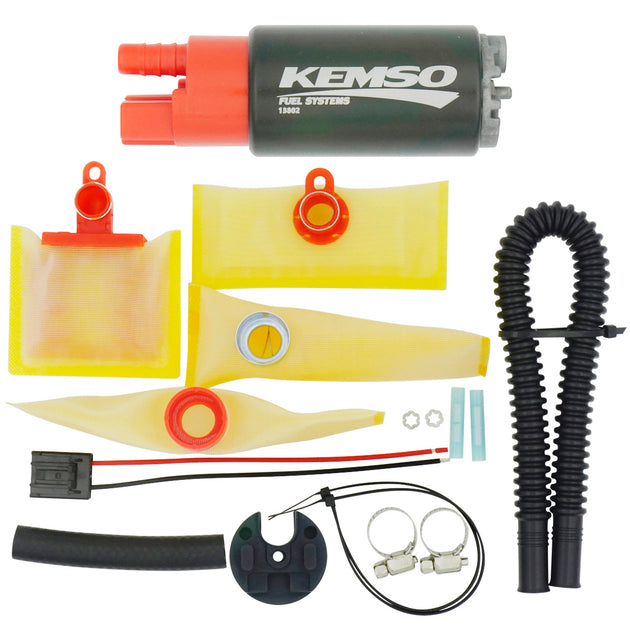 The system layout design needs to take into account pressure gradient and turbulence control. Optimizing the pipe diameter to maintain the Reynolds number within the range of 3000 to 5000 can prevent the low-pressure cavity induced by vortex disengagement. The installation position of key components such as the electronic fuel pump should be at least 15 centimeters lower than the fuel tank outlet to form a positive pressure head of 0.15 bar. Through 3D fluid dynamics simulation verification, it was found that reasonably setting the pipe diameter sudden change transition zone (length/diameter ratio ≥5) and limiting the local flow velocity to below 7m/s can increase the cavitation margin (NPSHa) by 25%. Referring to the 2008 Indy 500 event technical report, its fuel track optimization scheme reduced the pressure fluctuation amplitude by 48% by adding a 6-millimeter deflector.
Real-time monitoring and preventive maintenance form the last line of defense. The fuel distribution module integrates a temperature sensor and pressure transmitter with 0.1% accuracy, and in combination with a controller that samples every 100 milliseconds, it can predict the risk of vapor lock 60 seconds in advance. Statistics show that regularly replacing the fuel filter every 500 hours of operation (with the filtration accuracy improved to 10 microns) and monitoring the current fluctuations of the pump body (the normal value should be stable within the range of 8±0.5 amperes) can extend the average service life of the fuel pump from 15,000 hours to 24,000 hours. In 2021, experiments conducted by Shell's Global Technology Center confirmed that such proactive maintenance strategies can reduce the probability of sudden shutdowns by 92% and maintain a high overall equipment effectiveness (OEE) level of 98.7%.
The system layout design needs to take into account pressure gradient and turbulence control. Optimizing the pipe diameter to maintain the Reynolds number within the range of 3000 to 5000 can prevent the low-pressure cavity induced by vortex disengagement. The installation position of key components such as the electronic fuel pump should be at least 15 centimeters lower than the fuel tank outlet to form a positive pressure head of 0.15 bar. Through 3D fluid dynamics simulation verification, it was found that reasonably setting the pipe diameter sudden change transition zone (length/diameter ratio ≥5) and limiting the local flow velocity to below 7m/s can increase the cavitation margin (NPSHa) by 25%. Referring to the 2008 Indy 500 event technical report, its fuel track optimization scheme reduced the pressure fluctuation amplitude by 48% by adding a 6-millimeter deflector.
Real-time monitoring and preventive maintenance form the last line of defense. The fuel distribution module integrates a temperature sensor and pressure transmitter with 0.1% accuracy, and in combination with a controller that samples every 100 milliseconds, it can predict the risk of vapor lock 60 seconds in advance. Statistics show that regularly replacing the fuel filter every 500 hours of operation (with the filtration accuracy improved to 10 microns) and monitoring the current fluctuations of the pump body (the normal value should be stable within the range of 8±0.5 amperes) can extend the average service life of the fuel pump from 15,000 hours to 24,000 hours. In 2021, experiments conducted by Shell's Global Technology Center confirmed that such proactive maintenance strategies can reduce the probability of sudden shutdowns by 92% and maintain a high overall equipment effectiveness (OEE) level of 98.7%.
The system layout design needs to take into account pressure gradient and turbulence control. Optimizing the pipe diameter to maintain the Reynolds number within the range of 3000 to 5000 can prevent the low-pressure cavity induced by vortex disengagement. The installation position of key components such as the electronic fuel pump should be at least 15 centimeters lower than the fuel tank outlet to form a positive pressure head of 0.15 bar. Through 3D fluid dynamics simulation verification, it was found that reasonably setting the pipe diameter sudden change transition zone (length/diameter ratio ≥5) and limiting the local flow velocity to below 7m/s can increase the cavitation margin (NPSHa) by 25%. Referring to the 2008 Indy 500 event technical report, its fuel track optimization scheme reduced the pressure fluctuation amplitude by 48% by adding a 6-millimeter deflector.
Real-time monitoring and preventive maintenance form the last line of defense. The fuel distribution module integrates a temperature sensor and pressure transmitter with 0.1% accuracy, and in combination with a controller that samples every 100 milliseconds, it can predict the risk of vapor lock 60 seconds in advance. Statistics show that regularly replacing the fuel filter every 500 hours of operation (with the filtration accuracy improved to 10 microns) and monitoring the current fluctuations of the pump body (the normal value should be stable within the range of 8±0.5 amperes) can extend the average service life of the fuel pump from 15,000 hours to 24,000 hours. In 2021, experiments conducted by Shell's Global Technology Center confirmed that such proactive maintenance strategies can reduce the probability of sudden shutdowns by 92% and maintain a high overall equipment effectiveness (OEE) level of 98.7%.
Shop 12,400+ vet-authorized medicines.
From flea & tick preventives to compounded cat thyroid chews — reviewed by a DVM, priced 31% below clinic retail on average.
This article is for educational purposes only and does not replace veterinary care. Always consult your licensed veterinarian before starting, changing, or stopping any medication or supplement for your pet.